Powered By Blogger

Tuesday, June 25, 2013

Time Well Spent...Absolutely!

Time Well Spent...Absolutely!
             As I write my final entry in this blog, I find myself full of a variety of emotions ranging from pride to elation to even  a bit of sadness.  Reflecting back on the past 20 months, I feel I have truly changed as a person, an early childhood professional and certainly as a leader and advocate for Head Start.  I realize now that the future of our country depends on people like us who prepare young children for positive school experiences that will help them become productive members of society.
            Throughout this program I gained insight into many things even after many years in the field.  I learned how to be more culturally competent and the importance of really believing that our ability to make a difference is closely tied to the relationships we build.  I also learned that one thing that is constant is change. This applies on all levels of our work and personal life.  I learned that a good leader is able to embrace those changes and turn what sometimes seems to be a negative into a positive taking it a step further by convincing staff of the same thing. Finally, I learned that hard work does pay off in many ways.  The end result of applying what I have learned has helped me become a more competent leader.
            While we have never met face to face, I feel that I have gotten to know many of you well and value all you have shared.  I wish you all the very best as you move forward with your careers. 
“Success means that we go to sleep at night knowing that our talents and abilities were used in a way that served others. “- Marianne Williamson
If we can truly feel that each day, we know that we have made a difference. So ends this journey…..
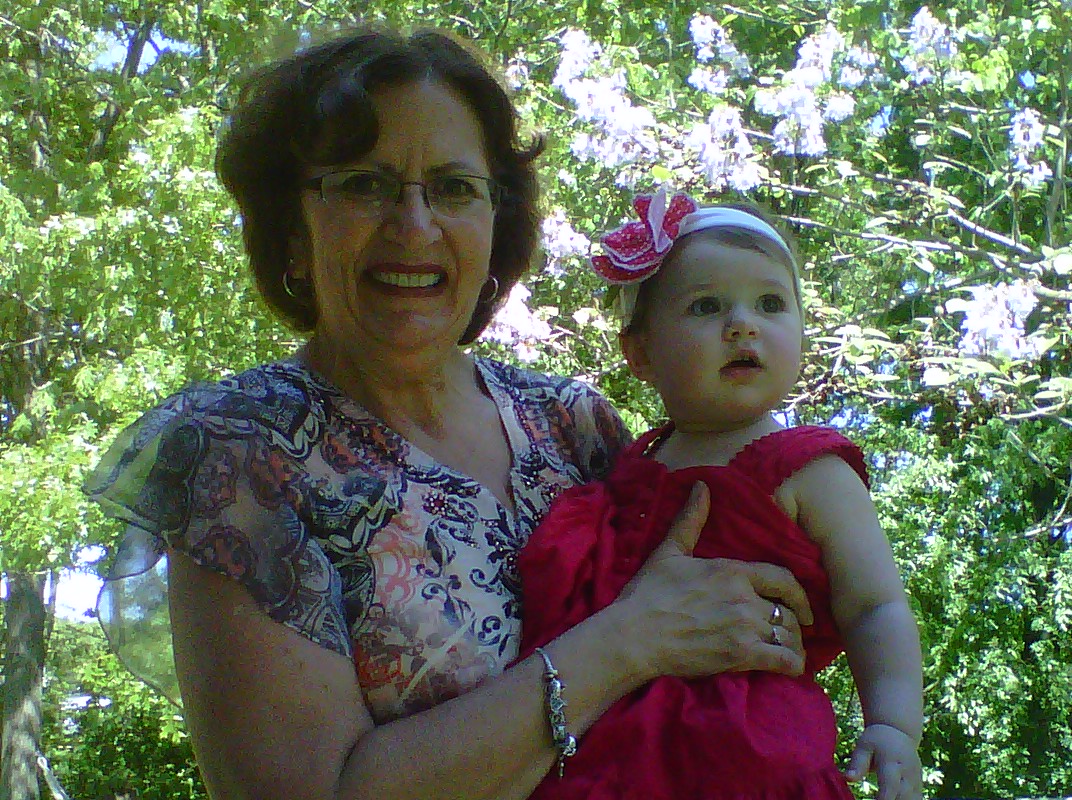

Sophie and her Nana….she is my hope for the future!
My email address is jablimline@aol.com.  I would love to continue the friendships that have been a special part of the past 20 months.  Please stay in touch.


Thursday, June 13, 2013

International Opportunities in Early Childhood Education

International Jobs/Roles in Early Childhood Education
                It was very interesting to read about international organizations that focus on early childhood issues and potential jobs related to them.
                The first organization I considered was Save the Children.  I have contributed to this organization for a few years and have received literature from them on the many initiatives around the world that they are involved in. The mission of Save the Children is to inspire break throughs in the way the world treats children.  It is a large organization employing over 14,000 people in 120 different countries.  I would enjoy being a trainer that would provide orientation for new teachers.   By mentoring teachers and providing a solid foundation that is culturally sensitive and prepares teachers to make an immediate and lasting change in the lives of the children they serve by improving their health and enhancing their education, I feel that I would be making a difference in society.
                The second organization I would consider working for ICF International Early Education Services. While I was familiar with the branch of ICF that serves as the training and technical assistance contractor for Head Start but I did not realize they also have an international division that has a strong program in India. It was formed in 2007 to help address the lack of early childhood standards and licensing regulations.  The initiative is currently working with local earl y childhood experts to design a national licensing and accreditation system that would be equitable and encourage improved quality. I would enjoy taking what I have learned and sharing it with new teachers.
                Lastly, I would consider a position with the United Nations Educational, Scientific, Cultural Organization (UNESCO).  This is one of several groups that are under the umbrella of the United Nations.  The mission of the organization is to advocate on behalf of early care and education programs around the world that attend to health, nutrition, security and learning and support holistic development of children.  One position described on their website really caught my eye.  It was a Project Officer for teacher development in Paris, France. The job entailed working with new teacher in a mentoring capacity. 
            I feel that I would be a viable candidate for any of the jobs listed given my years in the field and my newly acquired knowledge gained through my Walden studies. I also think the knowledge I have gained over the years being involved in advocacy organizations would be useful.  While I am very content in my current position, it was interesting to consider international possibilities.  
Additional information on these organizations can be found on their respective websites listed below.
ICF International Early Education Services- www.icf.com/markets/education/campaigns/international- ece

Thursday, May 30, 2013

Opportunities on the National Level

Jobs/Roles in Early Childhood Education on the National /Federal Level
                Since my background in early childhood has been varied over the past 25 years, there are several dream jobs I would feel I could do well and make a difference in the lives of children and families.  I was somewhat surprised to actually find some postings when I began to research opportunities for this assignment.
                The first position I would consider as a Grantee Specialist for ICF International. This is a large corporation that meets the training and technical assistance needs for many different industries and service organizations, including Head Start.  As a Grantee Specialist, the person works with Head Start programs that have been identified as having a program deficiency.  Their base is in their own home and there is considerable travel involved with the position. Grantee Specialists also facilitate professional development at the request of Head Start programs they are assigned to.  ICF International is a well-respected organization that prides itself on being   innovative.  For this position, a Master’s degree with a strong concentration in program design and management is preferred along with five years’ experience as a Head Start director. I enjoy trouble shooting, educating adults and helping with the strategic planning process so I think this would be a good fit for me.
                The next position I would consider would be as a Director for the National Association for the Education of Young Children’s Academy for Early Childhood Education (NAEYC). This job supports programs completing the NAEYC accreditation process.   I think I could use my years of experience working in the field to help directors prepare for the process.
                I would also consider a position as a Program Specialist in the Region 3 office of Head Start.  This position supports the direct service providers of Head Start within a specific geographic area.  As a Program Specialist, you provide guidance and support to program directors as they formulate school readiness goals, family engagement strategies and general program management concerns.  Having been on the other side of the position as a program director, I feel I would have not only formal education in early childhood but also working knowledge of the challenges directors face.

                The last position I found as I researched jobs on a national level would be a Grant Reviewer for the Administration for Children and Families which is a component of the Department of Health and Human Services. This Federal department reviews all applications for Head Start funding. After being trained on site in Washington, DC, most the reviewing is done virtually with a cohort of specialists.  The group includes experts in the early childhood field as well as financial experts and health nutrition experts.  Again, having written several grants over the years, I feel I would be a working knowledge to the process.

Tuesday, May 14, 2013


Exploring Roles in the ECE Community: Local and State Levels
                I feel that part of my responsibility as a Head Start Director is to be connected to organizations that support the early childhood community.   Locally, I have been involved with East Penn Association for the Education of Young Children.  It is an affiliate of the national organization.  The group provides a venue for connecting with other early childhood professionals in my community.  Over the years we have planned conferences, attended Early Childhood Action Day in Harrisburg, the state capital and worked together to keep local legislators informed about early childhood issues.
                I also am a member of the Pennsylvania Head Start Association (PHSA).    This group is an affiliate of the National Head Start Association.  The main purpose of the group is to be a voice for Head Start in Pennsylvania.  It is an active advocacy group.  PHSA also facilitates Director’s Round Tables quarterly which provide opportunities for networking which is helpful. I participate in this group because it is a good way to stay informed especially on political issues that affect Head Start.
                Having come to understand what a Community of Practice (COP) is, I realized my participation in the Berks Early Care and Education Council (BECEC) is an example of a COP.  This group came together informally with a shared mission of providing services more efficiently for young children in our community that have special needs.   As the group evolved, we also began to work together to plan and carryout a conference each Spring that is not only for practitioners in the field of Special Education but also parents.
                 The three organizations I have listed have unique purposes in my life as an early childhood professional.  I have made connections with others in my field that are beneficial in many ways.  I also feel that I have made some friends who share the same passion I do for the work we do.
                I reviewed the job opportunities in Pennsylvania by doing a general Google search and found several that were interesting.  One was a collegiate teaching position at Millersville University.  The opening is for an instructor for their Elementary Ed/ Early Childhood Program.   One of the things that motivated to acquire a Master’s degree was to someday teach on the college level. 
                Another job that I found interesting was that of Keystone Stars Specialist.  Keystone Stars is the quality rating system in Pennsylvania.  Early childhood programs of all sorts have the option of participating in Keystone STARS.  There are five levels of excellence that can be attained.  There are perks for programs that reach STAR  5 including additional program funding.  The program is known throughout the state by parents and provides a rating scale that parents can use to help them choose a child care facility.  The Specialist helps programs prepare for each STAR level and evaluates the quality of their work. 
                The other job that seemed interesting to me was also a teaching position.  It was part of the continuing education program at Northampton Community College.    I think working with non-traditional students would be interesting and take a different set of skills than what would be needed in a more traditional college setting.
                In all three positions, a Master’s Degree in Early Childhood was preferred as well as at least three years direct experience in an early childhood program.   The STARS position also required administrative experience preferably in an early childhood setting.
                Exploring options in the field of early childhood education is not something I typically do since I am content to finish out my career in my role as a Head Start Director but it gave me insight as to other options I will have at the completion of my degree.

Wednesday, October 24, 2012

The Journey Continues.......

As we prepare to move on to another phase of our Master's Degree  journey,  I want to thank you all for the thoughtful contributions you have made along the way.  Some of us will continue on through the administrator's track while others will move on to other specialty areas.  Best wishes to you all !
                     Judi

Thursday, October 11, 2012

Adjourning


Saying goodbye can be difficult in many circumstances we find ourselves in both personally and professionally. I think our level of commitment to the group weighs heavily into whether we can just walk away or whether we have a difficult time.  It was extremely difficult for me to leave the mentors that I had recruited for a school-based mentoring program I coordinated a few years ago. This group of individuals from different sectors of our community made a commitment to meet with a student at risk of dropping out of school for at least one hour every week.   The individuals involved took time out of their busy work day to meet their student at school and give them the one-on-one attention many of them rarely received.  When I made a career change, telling the group I would be leaving was one of the hardest things I have ever done. This group had become more than people I recruited to mentor at –risk children, they had become my friends as well. I had serious concerns about what would happen to the program after I left the agency which made saying good bye even more difficult.  Sadly, because of the time of year I left the program, I wasn’t able to plan a closing event. It is something I regret even now, five years later. 

                 Over the past months as I have worked on my master’s, I have had regular online contact with my classmates through our discussions and blogs.  The relationship is certainly different than a face to face relationship which in my opinion, makes adjourning from the group different.   The personal connection is lacking so saying goodbye for me will probably a closing blog entry to my classmates.

                Adjourning is important as a team completes their task because it provides everyone with the opportunity to feel a sense of accomplishment and freedom to move to new things.  I think as part of adjourning, the team has the opportunity to acknowledge each other for the work they completed. As I think about my experience with leaving the mentoring program, I realize now that formally adjourning from the group would have actually made it easier for me to move on, a lesson learned.


Saturday, October 6, 2012

Using My New Conflict Resolution Skills


This assignment came at a perfect time!  For the past two weeks I have been dealing with a conflict at work that involved me, three of my staff, my supervisor and the director of our department.    Here are the details to set the scene- every year staff and I attend the Early Childhood Summit for three days in October.  It is a wonderful event that provides many workshops, experts in the field as key note speakers, state and federal updates on funding and a good opportunity for networking with other early childhood professionals.  It is something I include each year as I prepare the train and technical assistance budget for the program.  Past practice has always been that each person attending has their own room at the host hotel.  We all registered and reserved our rooms as we have done in the past.  About two weeks after this was completed, my supervisor emailed me requesting that I discuss sharing rooms with the staff going this year since the organization itself is tightening spending.   I explained to her that the money is already in place in our program budget so it was not a hardship for us.  I also reminded her that if the money was not spent out, it would need to be returned to the funder and could affect the amount of the allocation for the next program year.   Her response was that was still the present expectation of the organization that people share rooms when going to conferences.  I found myself in a true conflict both personally and professionally.  I knew I had no intention of sharing my room and as I discussed it with the other staff attending, each had legitimate reasons for not feeling comfortable sharing a room.  Everyone also said, had they known before-hand that would be the expectation; they would have declined the invitation to attend.  I have struggled with this for the past two weeks!  As I read the materials for this week, I found myself thinking about ways to incorporate these techniques into my situation.  First, I met with the staff involved to give them the opportunity to share their feelings relating to this request.  I then presented their concerns to my supervisor and the director and proposed a compromise.   I suggested the possibility of finding other accommodations in an all-suite hotel.  If I could find something that was less than the cost of separate rooms, I would propose that to my staff.  They both found that to be reasonable possible solution but the director said that going forward, sharing rooms would be expected but if there are no accommodations that would work, she would allow everyone to keep the arrangement they already made.  I was grateful for the internet! It made my research fairly easy and didn’t take too much time in my already very busy day.   As it turned out, the options were very limited and the only accommodation I found that was less expensive had a suite with only a partially divided room and still only one bathroom.   I met with my staff again, and shared what I found.  They did not feel those accommodations would be any better than just sharing a room.  I  reported back to my supervisor  the outcome of my meeting with my staff and she agreed, I had done as much as I could to attempt to comply with the new way of thinking  and that arrangements already made should stand.

                Reflecting back on the conversations with my staff and with my supervisor and the director, I can now see how different strategies affect the outcome when there is conflict.  My staff actually shared that they felt respected by the way I handled this and really appreciated it. I can’t say I felt the same way in terms of how I was treated by my supervisor and director.  The tone of my meeting with them was authoritative and uncomfortable for me.  In the end, there is a positive outcome and we will all be able to attend Summit.  I was grateful for the new skills I had just learned related to conflict resolution.  How timely this assignment was!

Saturday, September 29, 2012

Who Am I as a Communicator

     The three  tests we used for this assignment provided an interesting assessment of my communication skills. As I compared how I scored myself with the scores provided by my co-worker , Nanette and my long-time friend, Pat, I noticed some similarities.   I was surprised by the difference in the communication Aniexty Inventory.  While I consider myself a competent communicator and felt my score reflected that, both Nanette and Pat scored me considerably higher. I must admit, this bolstered my confidence.
      I also discovered just how much my personal schema impacts on my first impression of people I interact with. When I reviewed my classmates answers, I realized that we all probably based the answers on a personal frame of reference.  I think it would be difficult not to . Having that awareness now, I intend to before conscious of this as I make new aquaintences.
     Another insight I gained this week was related to the Listening Skills Profile.  My score as well as the scores Nanette and Pat provided, put me in Group 1. I wasn't  surprised by the style being people oriented. Every position I have ever held in the work world has involved interacting with people. The description pointed out that people scoring in this group are empathetic which is a positive quality when interacting with others.  It also stated that there are some negative implications as well which I had never thought about.  Sometimes being too empathetic causes one 
 to be more trusting of others which can create problems in communication and relationships. As I thought about this more, I understood the connection.  I see being people oriented as a benefit both personally and professionally. This assignment helped me come to understand the importance of  keeping a balance between being empathetic and at the same time maintaining a realistic perception of how other people are feeling as we communicate with them.

Wednesday, September 19, 2012

Strategies for Communicating More Effectively


I find myself communicating with the staff I oversee differently than I do with other colleagues.  We have different personal backgrounds, different levels of education and different work ethic in some cases.  Sometimes this becomes problematic and I almost set myself up for issues by not taking the time to adjust for these differences.  I have found myself misreading their nonverbal cues and even failed to consider our cultural differences at times.  The three techniques that especially stood out for me this week that may help me remedy this problem are self-monitoring my environment and the others in it for signals that will help me determine how to present myself (O’Hair & Wiemann, 2012), becoming more aware of nonverbal behaviors of the group and improve my ability to pick up on the silent messages (Gonzalez-Mena, 2010) and applying the Platinum Rule by putting myself into the other person’s frame of reference. I hope to improve the communication with my staff and in doing so, have more productive and positive interactions with them.   I think incorporating these things into my interactions with the staff will produce a more positive climate for everyone. I find myself thinking about the quote “In each head there is a world” (Gonzalez-Mena, 2011) and knowing that there is so much truth in just those few words. By adopting that mindset when I communicate with others will help me become a more competent communicator.


References

Beebe, S.A., Beebe, S.J. & Redmond, M., (2011). Interpersonal communication: Relating to others  

                (6th Ed.). Boston, M: Allyn & Bacon

Gonzalez-Mena, J., (2010). 50 strategies for communicating and working with diverse families.  Upper  Saddle River, NJ: Pearson Education, Inc.

O’Hair, D., & Wiemann, M. (2012) Real communication. New York: Bedford/St. Martin’s.


Wednesday, September 12, 2012

Words Really Do Tell the Story!


This assignment was interesting!  I chose a new television show called “The New Normal”. The show aired on NBC on Tuesday evening.  The characters were two men in their 30’s- Bryan and David, a woman who appears to be a little younger- Goldie, her daughter about 10 years old- Shania and another woman in her 50’s who is not named.        (The ages are estimated!) As I watched it without the sound, it seemed to be a first meeting between the 2 men.  It took place in a night club of some sort.  Initially it seemed like two guys becoming friends.  As the storyline continued it became obvious that they were gay and they were actually flashing back to how they met.  The younger woman at first seemed like she was in a romantic relationship with David. They all seemed to be avoiding the grandmother. The plot seemed to be centered on Goldie and Shania moving into a new house.  Shania seemed dressed oddly for a child her age and had some difficulties when she started a new school. The show ended with David answering the telephone and making an announcement to Bryan and Goldie.  Throughout the show, there seemed to be an obvious friendship between Bryan, David and Goldie.  Bryan had numerous conversations with Shania.  The grandmother seemed to be plotting something.
                When I watched it with the sound, the story was somewhat different!  Bryan and David were in a stable, romantic relationship and had decided they wanted a family. Both were successful in their fields and well off financially.  Goldie had just ended her marriage and was struggling to make ends meet financially and had hopes of going to law school.  Bryan and David meet with Goldie to discuss her becoming a surrogate mother for David and Bryan.  The grandmother it turns out is very bigoted against gays and is appalled that Goldie would even consider this.   Bryan and Shania share a lot of things as he tells her what growing up was like for him because he knew he was different at an early age.  They had a special friendship by the end of the show.  The telephone call at the end of the show was in fact the call from the Doctor’s office announcing a positive pregnancy test.
                I totally missed the part of the plot concerning Goldie becoming the surrogate without the conversation.  Initially, I assumed that Bryan and David were straight.  With the sound on, it was obvious from the very beginning that they were gay.  Their character traits were stereotypical for gay men. The grandmother’s part in the story was not at all evident without the sound because the nonverbal signals made it seem that she was friendly to everyone.  It was the commentary made in her “thoughts” in her head that helped me understand how she felt about gays and their becoming parents.
                Had I been watching a show I was familiar with, I would have had some previous knowledge of the relationships among the characters.  Since it was a brand new show, I had no prior knowledge of the relationships or the plot. This made the exercise really interesting and fun. The assignment helped me understand more clearly that communication is not always straight forward and things are not always what they seem to be making it important to always be open to all that is going on when communicating with others including the context in which the interaction occurs.

Wednesday, September 5, 2012

Competent Communication


When I think of an effective communicator one person immediately comes to mind.  I think of Rita.  She is a friend and colleague who spent many years working as a psychiatric nurse.  She used her many experiences to build a repertoire of workshops on the topic of social and emotional wellness.  Rita has a wonderful sense of humor that she incorporates into her presentations.  She is also a master at providing examples that are easy to relate too.  I have heard her speak many times over the years and I always find myself think “I know just what you mean” as she points out circumstances that have been stressful.  Her demeanor is warm and caring.  Even when she addresses a large group, she has a way of making you feel like she is talking directly to you.   Rita presented a workshop to my staff of teachers and family advocates last Spring that was a wrap up for our program year. Throughout the year, our professional development theme was related to social and emotional wellness for children and those that work with them. Rita has the ability to communicate on a level that was meaningful to my staff and make it relevant to the work they do which made the workshop very beneficial on a professional and personal level for everyone.  I use Rita as a model for communicating with people both personally and professionally by incorporating a little bit of humor and also keeping it real.


Friday, August 17, 2012

Professional Hopes and Goals


During the past 7 weeks as I studied Perspectives on Diversity and Equity,   I feel I have been provided a unique learning experience.  I found myself remembering many situations in my life that I honestly had not thought about in a long time. I also realized how things around me have changed over the years and also how I have changed in terms of diversity and equity.

            In this final post for  this class that helped me look more deeply at the challenges children and families face because of  intolerance and lack of cultural understanding, , it is my hope that through my work as a Head Start program administrator, I am able to make a difference in my community in the following ways : to provide a high quality program with staff that is culturally responsive in meeting the needs of all families, to investigate additional funding sources to provide services to more children,  and  to be more culturally responsive as I interact  with   my staff.

            In a more global sense, it is my hope that  the early childhood field continues to support the efforts around the world that are  addressing   the needs of children in those countries where expectations for children are very different from what we know as childhood in the United States.  It is my hope that advocacy efforts continue to bring social justice that will allow children all over the world to experience childhood and to experience positive educational experiences.

            Finally, I would like to thank my colleagues that have been a part of this learning experience for sharing their personal experiences related to diversity, equity and social justice. Also I appreciated the thoughtful feedback I received to posts I made to our discussions and my blog. I feel that this course, unlike any of the others I have taken on this journey to acquire my Master’s degree has had a personal and professional impact on me. 


Friday, August 10, 2012

Welcoming Families From Around the World


This assignment comes at an interesting time.  I enjoyed watching the Olympics this past week and reading some interesting stories about athletes from other countries.  One story that caught my attention involved the two women from Saudi Arabia who are the first to ever participate in the Olympics from their country.  Sara Attar participated in a track event and followed the tradition of being completely covered including a head covering called a hijab.  The other woman, Seraj Abdulrahim Shaherkani   who participated in judo did not.  This is being viewed as a huge step forward for women in Saudi Arabia as well as globally.

                 Having found detailed information on Saudi Arabia on the following website- http://www.everyculture.com, I decided to have my family originate from Saudi Arabia.  Their daughter will be entering my preschool class at a child care facility.  I would prepare for her arrival by in the following ways-

                1- I would learn more about the specific region of the country the family was from since I learned through my research of the country that there are four distinct regions and the lifestyles are different in each one.

                2. I would learn more about the dietary restrictions their culture and religion imposes to be sure to be mindful of this when preparing menus for the lunches served.

                3.  I would read more about the common practices concerning childrearing as related to parent child interactions and expectations.

                4. I would investigate the family’s level of comfort with English to determine if it would be appropriate to bring in a translator for their first visit to the center.

                5.  I would read more about the social etiquette especially concerning gender.  Having read about the Saudi views that are very evident even today concerning gender, I would try to be respectful of their beliefs in my interactions with the family.

                I think learning more about the Saudi Arabian culture in general would help me be prepared to handle some of the differences in a culturally responsive way and help the child and her family feel welcome and comfortable .

Wednesday, August 1, 2012

The Personal Side of Bias, Prejudice and Oppression


                Growing up in the 1950’s and 60’s, I remember clearly the scenes on the evening news of police brutality and race riots across our nation.  It was difficult to watch the treatment people were subjected to especially in the South.  In my community, there was no evidence of segregation and for the most part, there was equality for all.  As a child and even as an adolescent, I had a difficult time understanding what I was seeing.  Sadly, we didn’t discuss it as a family so I was left to try to figure it out on my own.   When I reached high school in the later 60’s, I gained a better understanding of the issues.  In my high school, there seemed to be equal opportunity for all students.  Interracial dating was unusual but it did occur.

                The segregation and unjust treatment of people of color completely diminished equity   which is what I feel led to the demonstrations and eventual riots.   Sadly, it was the only thing left to bring about desperately needed change in our society.

                As a young person watching these things on the news and not having conversations with my parents to help me understand what was happening, I was afraid and confused.  It was difficult to understand why people were treated so differently in other parts of our country. Reflecting back on this now, I realize that it was only when I learned about the issues in school that I found myself developing my own perspective on civil rights and the importance of equality.  That has remained with me throughout my life.

                As a country, those difficult times brought about necessary change.  The government adopted laws that protected all people from being treated so unjustly and proposed equality on all levels. While I know we have made tremendous progress over the past 50 years, as I have gained a deeper understanding of the issues related to diversity through this course and others I have had on this journey toward my Master’s degree.  I have come to realize we are not completely there yet. There are still groups within our country that are subjected to bias, prejudice and oppression in varying degrees. As an early childhood professional, I feel I have a responsibility to the staff I work with, the children and their families to be culturally responsive and respectful of all people and accepting of the elements of their social identity that may be different from mine.

Thursday, July 19, 2012


Practicing Awareness of Microaggressions          

                Observing people around me at work this week with the intent of noticing microaggressions was interesting.     I honestly saw very little in terms of the interactions among my staff that could be categorized in that way until today.  I met with 3 supervisors to work on planning for the upcoming school year. In discussing placements, one of them made a comment about a family worker who is morbidly obese.  She complained about this person expecting others to do her work because she is so overweight and that she was just plain lazy.  She continued to insinuate that her obesity prevents her from doing what is required and that families wouldn’t want to work with her. Her comments were not founded. Finally, the other woman who  supervises the person that was the subject of the comments  spoke up and said many assumptions were being made about her job performance   that were not true .  I purposely did not comment initially.  I wanted to let the conversation continue to see where it would go and how many other things she would blame things she would blame on the woman’s obesity.   As I sat and listened, I realized that microaggressions can occur even among professionals.  It was not a good feeling to know that someone in a supervisory position could be so judgmental in such an inappropriate way. 

                My observation clearly pointed out that when there is insulting commentary based on a person’s appearance it can make everyone involved in the conversation very uncomfortable.  Taking it a step further, I observed a change in the interactions among the group even after the conversation moved on.  The body language of the supervisor who was listening to the derogatory comments about her staff person changed as did the amount of conversation being exchanged by the two.   Also, the supervisor whose staff person was the subject of the comments seemed to pull back from the conversation. This exercise has made me aware of how the tone of a group interaction can change when microaggression surfaces.


Friday, July 13, 2012


Other Perspectives on Diversity

                In seeking other perspectives on culture and diversity, I decided to be diverse in my choice of whom to interview!  The results were very interesting.  I spoke to my sister who is professional woman in her 50’s.  She works in the field of social work as a Family Therapist.  Her definitions of culture and diversity are as follows: “culture is the unique blend of traditions, rituals, customs, style, religion, belief systems, and family customs that encompass a particular group of people. Diversity involves the differences that make up the specific humanness of various cultures.”

                The second person I interviewed is a staff person in my Head Start Program who is a woman in her 40’s, bilingual and bicultural and originally from Puerto Rico. She defined culture and diversity as      “all the things you have learned from your family. It is how you think about things especially personal things.  It is about being Latino. It is what makes me different from some of the people I work with but more like many of the families I know from my work. Diversity is what I think about that makes us different.  It is what I see every day where I live and work.”

                The third person I interviewed was a male in his 30’s who works in special education. He defines culture and diversity as follows: “Culture involves whatever little subgroup you allow to define you. It could be your country of origin, the people you live with or whoever you spend your time with.  Diversity is a well-represented mix of cultures, ideas and customs in a certain defined area. “

In all answers, there was a common thread that culture is related to what we learn from our family throughout our lives. Some reference was in a more traditional sense while the third person seemed to be more open about what constitutes the group.  It includes our morals, traditions and is at the heart of who we are.   There were not any references to ethnicity from my sister or the male I interviewed.  My colleague on the other hand   made direct reference to being Latino.   

Reflecting on other people’s definitions has made me realize we sometimes make assumptions about people’s views on these topics even within our own families.   I also realized that age seems to be a factor in how we view things.  All very interesting……


Friday, July 6, 2012


My Family Culture

                What a thought provoking exercise!  As I pondered what I would take if I found myself faced with being evacuated from my home as described, the three things that came to mind were my Bible, a family photo album and a blank journal.  The Bible provides me with guidance through every aspect of my life.  Knowing myself, if I were faced with this predicament, I would be depressed and need encouragement to get through the situation. I would also need guidance.   I would find both of these things in my Bible.  I would take a family photo album so I could always be able to look at my family who is precious to me. The third thing I would take is a blank journal to write about my experiences   throughout the ordeal. 

                I would be extremely upset giving up any of the three items. My feelings would run the gamut of anger, extreme sadness and depression.  I would plead my case as to why they were so important to me and my need to keep them given the circumstances I was forced into.

                This exercise reinforced what I knew about myself going into it.  My faith is the foundation of my life no matter what the circumstance. Family is extremely important to me as well and as I have gotten older, I journal to keep a running record of the experiences I have. 


Wednesday, June 27, 2012

Moving on to More about Diversity

As I begin my sixth course toward my Master's degree, I am looking forward to learning more about views on diversity.  I think it is easy to come to conclusions about diversity that are somwewhat narrow.  As  I viewed the video Playing for Change on youtube, I was taken back by how that was put together.  I also viewed the clip Imagine.  I must admit, I am a huge Beatles/John Lennon fan so it caught my attention in the list.  I enjoyed watching it and was moved by it.  I am looking forward to what lies ahead.

Thursday, June 21, 2012

When I think of research.....


            As I reflect on the past eight weeks, I have come to realize I am in a different place than I was at the onset of this course. I began with many feelings of apprehension since my experience and education related to research of any sort was very limited.  The terminology, methods and principles all seemed so complex.  Each week as we added a new element to our simulation and read more to understand the terms and process, I gained a little more confidence.  

            My “fear” of studying research has been addressed somewhat.  I feel that I have gained knowledge in all areas including the terms, the process and how to be sure that any research I would consider conducting is done keeping in mind the importance being equitable.

I also learned about being conscious of the feasibility of a topic I would study. Initially, my question was too broad and had too many elements to consider investigating.  Through the weekly assignments, I learned to narrow the scope.  This was my biggest challenge as I thought about a question.  I knew what I wanted to accomplish but not exactly how to begin.   
            For me, the notion of equity was new to me as it is related to research. I continue to think about how important this is. Going forward, it will always be a consideration in my work. I will also consider using the process we learned to conduct actual research related to my various aspects of my work. I don’t think I would have considered this prior to taking this course.  All in all, it has been an interesting and worthwhile experience

Friday, June 1, 2012

Early Childhood Australia


Research around the World

I viewed the website Early Childhood Australia.  The information was easy to access and seemed very current. The site had a wealth of information on key early childhood research. The articles and books are not free to retrieve but a summary is provided on the website. I reviewed an article entitled ”Children’s Resilience: Working with the Early Years Learning Framework”. The article explained how work has been done to use the Early Years Learning Framework to help formulate strategies for enhancing children’s resilience.  It also provided information on the factors that contribute to a child’s resilience.  Another interesting article, “Greening Services-Practical Sustainability” provided strategies for helping children gain an understanding of the importance of recycling.  The final article I reviewed, “Young Children as Active Learners” supported children being self-directed in their learning.  It also discussed the importance of play.  I found it interesting that the current research in Australia is very similar to what is currently being studied in our country.

            I was surprised to find the research on promoting being green and our responsibility to sustain our earth on a preschool level.  The focus was on involving children in many ways.  It just seemed like much more than celebrating Earth Day one day per year as we do in our country. I also was surprised to see the similarities between Early Childhood Australia and our professional organization, the National Association for the Education of Young Children (NAEYC).  Many things aligned closely.

            I found the many videos especially interesting. They covered many different topics and provided many useful strategies. One video reviewed the types of care for children.  It referred to “long day care”.  This was a term I never heard before but watched the video and came to understand it as extended hours for working parents.

            All in all, I found the website well designed and easy to navigate.  I was somewhat surprised at the amount of similarity in the Code of Conduct as well as the many topics that supported best practice as we know it.


Reference

Early Childhood Australia- http://www.earlychildhoodaustralia.org.au


            .